Letter 178: Choosing Surrender to Recover
"There are two distinct voices in my head, and I wonder if this is what it’s like to go insane."

A few weeks ago, my husband and I were at dinner with friends when the conversation turned to substance abuse. One friend opened up about watching a family member disappear into addiction—becoming, before his eyes, a stranger he could no longer reach. I could see the pain in his face as he spoke, and the desperation, too: his family had done everything they could, and still there was nothing more to do. As I've heard before, "They have to hit rock bottom before they can change.”
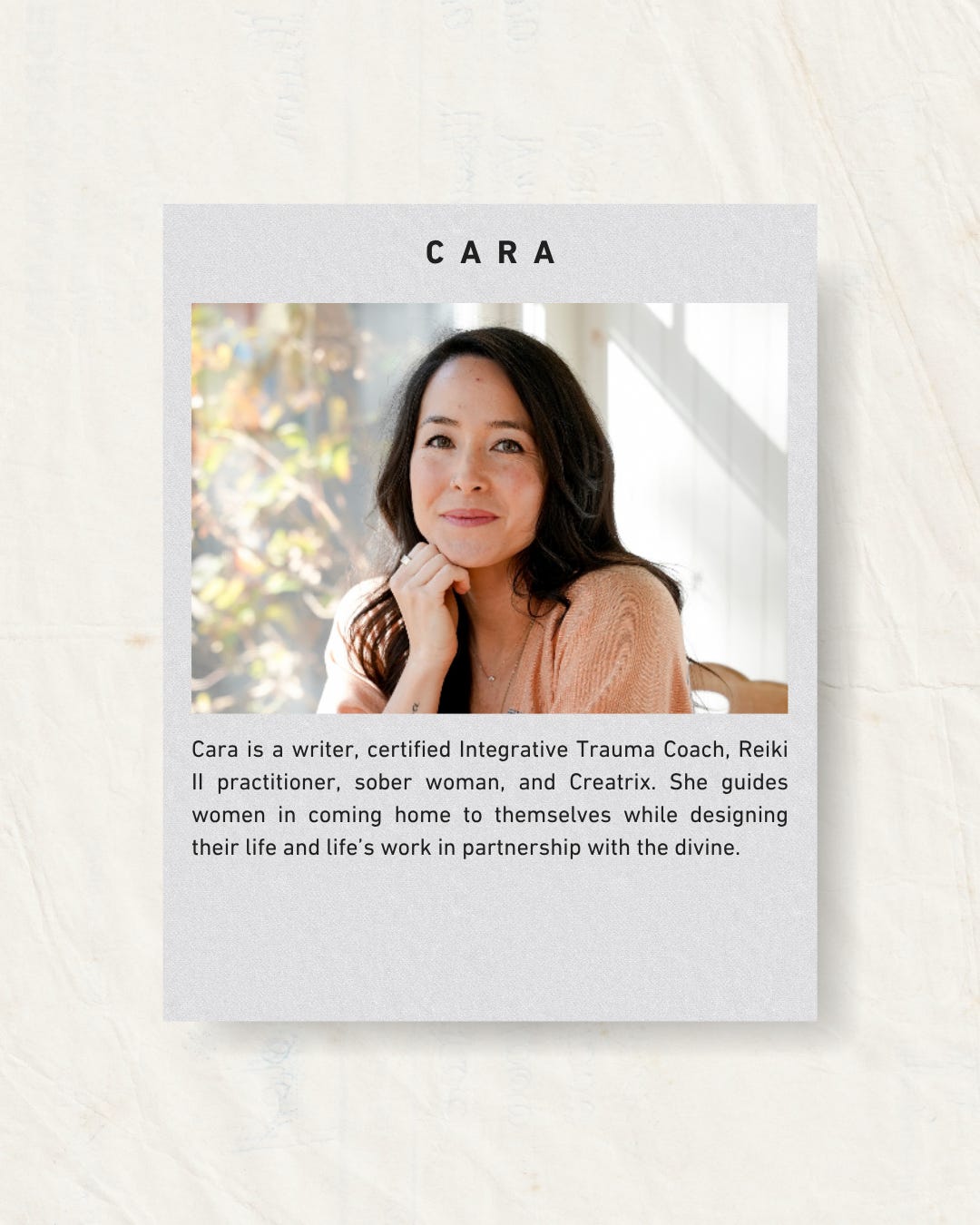
Today, our incredibly brave new writer, Cara Matsukane, shares her story on the 12-year anniversary of her sobriety—the moment she knew she'd hit her lowest point, and how one decision changed everything. Cara's willingness to trust her intuition and act on it is a testament to our unknown depths.
Happy 12 years, Cara! May your honesty light the way for someone else's. —Molly
“Let yourself be silently drawn by the strange pull of what you really love. It will not lead you astray.”
Rumi
I feel my body rise up from the chair, walk into the kitchen, and take a shot of vodka.
I don’t want it. I don’t know why I’m doing it. But I get up again and again until the bottle is empty.
It’s a Monday at 1 P.M. I am working from home, and the vodka is leftover from a party. Normally, I don’t keep alcohol in the house. That’s one of the ways I try to control my drinking. It doesn’t work.
I remember thinking: I feel like a robot. I don’t even want this. Why am I drinking it?
The thought doesn’t stop me.
I hide the empty bottle in the recycle bin outside so my roommates won’t find it. For six months, my boyfriend and I have been making rules to try to curb my drinking. I tried to go 30 days without drinking, but then Christmas was happening, so that went out the window. I said I would only drink on weekends, but… what about happy hour after work? (Little did I know, these attempts to control it were a sign that I was already past the point of no return.)
The latest rule: I won’t drink unless I’m with him.
He calls me on his drive over.
“Are you drunk?”
“No.” It isn’t uncommon for me to lie about this. It happens more than it would to a normal drinker.
“It sounds like you’ve been drinking.”
I don’t know how to cover it up. So I admit it. And then something in me breaks.
“I have a problem.” I am crying now. “I can’t stop.”
From the tone in my voice, he understands something is really wrong. “Okay. I’ll come over. We’ll figure this out.”
We call my uncle, who has been in recovery for almost 20 years. He tells me about a 20-question quiz that helps you determine whether you have a problem. I take it immediately. If you answer yes to three, you’re probably an alcoholic.
I answer yes to seventeen.
The next day, I walk into my first meeting. Old men giving me a little too much attention, styrofoam cups of shitty coffee, and the smell of cigarette smoke prove the stereotype of AA that I’ve been trying to avoid. I’m the only woman in a room of about 10 people. I say the words they say: “I’m Cara and I’m an alcoholic.” I’m trying on their language even though it doesn’t quite fit yet.
That night, I sit in my living room, and my breathing becomes shallow.
What were you thinking? Your drinking is not that big of a deal. You are being dramatic. What about the party next weekend? What about weddings later this year? What about concerts? Dinner parties?
Then another voice, clear and distinct: No. It’s time for you to be done drinking now.
I hold my head in my hands and cry. I feel like I can’t trust my own thoughts. There are two distinct voices in my head, and I wonder if this is what it’s like to go insane.
I find a 6:30 A.M. meeting for the next morning. I white-knuckle it through a dinner party I’m hosting that night, ignoring the urge to pour myself wine while I cook, and feeling anxious while my guests drink theirs. Miraculously, I make it to bed without a single sip.
The next morning, I pull up in front of an antique shop. Giant, colorful, mismatched letters are scattered out front. I walk through a narrow hallway cluttered with art, prints, frames, and fabric. At the end of the hallway, I pull open a back door.
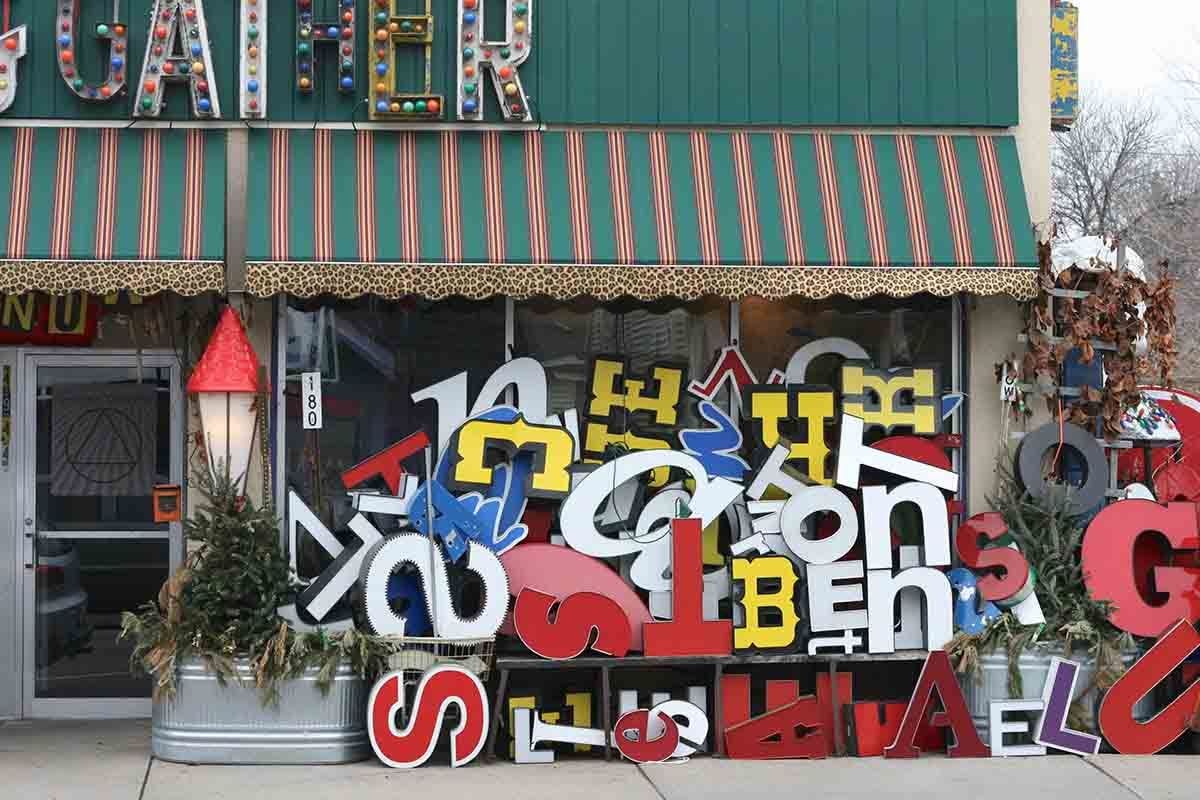
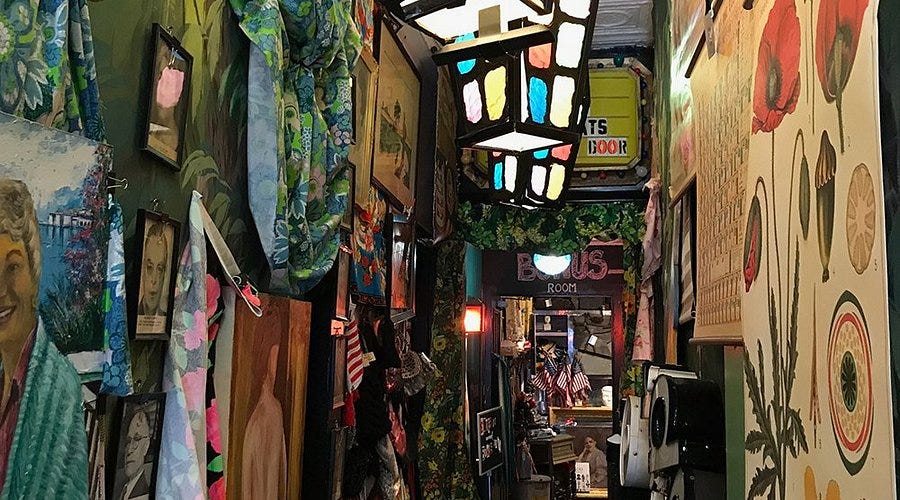
I’m met with soft lamplight, the smell of freshly brewed coffee, and the sparkly sound of lively conversation.
The room is cozy, filled with couches and loveseats. Someone at the front rings a bell. I find a seat at the end of a couch and wrap my arms around my purse, clutching it against my body as if it can protect me from dealing with my addiction.
As the meeting starts, I glance around and notice several camel figurines. Later I’ll learn the meeting was named for a poem comparing sobriety to camels.
A young man introduces himself and shares something that makes time stand still. He describes two voices in his head. Not being able to trust either one. The exact thing I sat with in my living room the day before.
Tears stream down my face.
In this moment, I feel the presence of God’s hand in my life. I know I am supposed to be here. In this exact place. At this exact moment. To hear this man share what I thought was only happening in my own head.
This moment is a window. An offering of grace. Somehow, for some reason, I take it. I surrender. I turn my will and my life over to the care of a God of my own understanding.
I haven’t had a drink since. That was July 15, 2014.
In the weeks that followed, I got a sponsor. I started going to that 6:30 A.M. meeting regularly. I joined a sober women’s book club. I asked other sober women to get coffee. I started working the steps. I discovered a design for living that asked me to connect with myself, to heal, and to devote myself in service to others.
This July, God willing, I’ll celebrate twelve years of continuous sobriety.
Over that time, I got married and divorced. I moved four times and rebuilt my recovery community in each new place. I changed careers multiple times. I started dating sober for the first time since I was eighteen. I lost loved ones. I had a miscarriage. I’ve known deep grief, betrayal, and disillusionment. Through all of it, I didn’t drink.
Today, I feel fortunate to be an alcoholic. That might sound strange to someone who drinks normally, but I wholeheartedly mean it.
If I weren’t drinking myself to death, I wouldn’t have had those moments of grace. I wouldn’t have learned to deal with life on life’s terms. I wouldn’t take care of myself the way I do now: eating well, exercising, meditating, connecting with my higher power every day, orienting my life around service, making amends.
This way of living is a gift I didn’t know I wanted. Twelve years ago, if you’d asked me whether I wanted to be an alcoholic in a twelve-step program, I would have told you that was exactly what I was trying to avoid by controlling my drinking. I couldn’t have known what it would open.
Everything I have now… my work, my marriage, my relationships with family and friends, my relationship to myself, my capacity for joy… grew from that program. None of it would have been available without the problem and without the despair that brought me to my knees.
The biggest gift I’ve received in recovery is my compassion. I know what it’s like to reach the bottom. To lose all sense of self-esteem. To feel deep shame and to want to escape your own life.
That experience gave me access to something I didn’t have before: the ability to love people without judgment. Because who am I to judge?
The young man at the camel meeting showed me I wasn’t alone. That’s what I want anyone reading this to know. Whatever voice is telling you it’s time, I hope you’ll take the window of grace and listen.
There is a room somewhere, lamplit with a soft glow, full of coffee and loving people, where someone will say the thing you thought only you were experiencing, and you’ll be home.
Cara’s 5 Favorite Things
I’ve been spritzing myself and my workspace with this delicious Goddess Body & Room spray. Made with all organic, natural & non-toxic Ingredients, it immediately elevates your mood and smells divine.
I picked up this oracle deck in Boulder, then serendipitously ran into the author in a sauna immediately afterward. It felt like divine feminine magic! I love the deck’s gorgeous artwork, simple messaging, and rituals with each card pull. Wisdom of the Divine Feminine Oracle Deck
I’ve been loving pickled onions as a fridge staple. They are such a delightful addition to eggs, salad, or veggies. Bonus: the vinegar content will help you manage blood sugar. You can make them yourself with this recipe or grab some at your local grocery store.
I recently read this book by Emily Henry. Magical realism for young adults, with a sweet romance and themes of grief, death, and intergenerational healing.
I love the combo of Mad Hippie Vitamin C serum + Motherline Balm for my morning skincare routine. Motherline uses 100% organic botanical ingredients. It is both nourishing and healing.
Cara offers trauma-informed coaching and initiation for women who want to stop repeating inherited patterns and start creating their lives from their own truth. She encourages her clients to explore their own healing through the lens of a devotional relationship: to self, the divine, work, and loved ones. Contact Cara or book a complimentary call to learn more about her work.
Substack:
1:1 Coaching: https://caramatsukane.com/wake-up-calls
With gratitude,
Cara Matsukane
P.S. Last year, Kate shared an incredible letter about generational trauma, hard decisions, and breaking the cycle, just as Cara shares here. This is one to bookmark!